
Check both axles
Confirm the supplied front and rear components. Some applications use separate rear air bags and dampers. A generic category photo does not establish the layout or quantity for your vehicle.
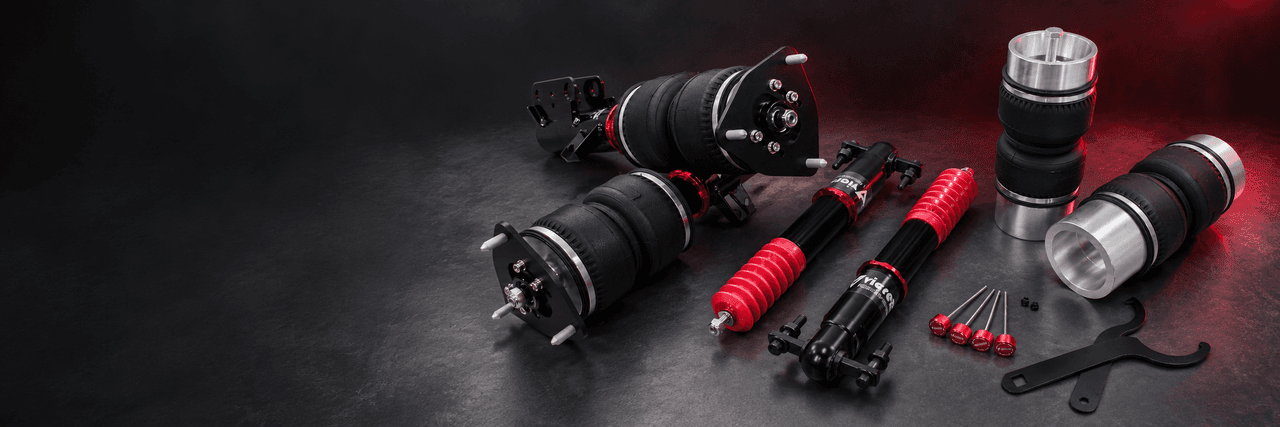
BUILD YOUR AIR SUSPENSION SETUP
Find the suspension kit for your vehicle. Compare front and rear components, mounts and compatible air management before you choose.
Components shown for reference. Kit contents and layouts vary by vehicle.
Choose year, make and model. Confirm chassis, drivetrain and factory suspension equipment before ordering.
Loading vehicle options…
Vehicle selection narrows the catalog. Match the selected SKU’s detailed application and your existing modifications.
Match chassis, model year, AWD or RWD and factory suspension equipment. Resolve any difference between the title and detailed fitment notes.
Check component quantities, mount design, fittings, tools and supplied hardware. Identify mounts or other parts that must be reused.
Confirm the air supply, manifold, lines and controls required for the selected suspension kit, plus installation and setup costs.
Compare the exact application, front and rear components, mounts and management requirements. Confirm the selected SKU’s included parts.
COMPARE THE EXACT KIT
Confirm the supplied front and rear components. Some applications use separate rear air bags and dampers. A generic category photo does not establish the layout or quantity for your vehicle.
Check top mounts, any reused factory parts and the documented height and damping adjustments. Mount design and adjustment features vary; confirm the exact SKU’s instructions.
Confirm compatible air supply, controls, fittings and lines with the supplier. An included fitting adapter alone does not establish compatibility with an existing or factory system.
Compare the full installed cost of the suspension components and required management. If you need tank, compressors and controls together with the vehicle kit, review the complete air ride category and its selected configuration’s contents.
Compare complete air ride kits with management →PLAN THE FINISHED INSTALLATION
Share chassis, drivetrain, factory suspension equipment, wheel and tire changes, and intended use. Ask for written confirmation when application details are unclear.
Include the required suspension and management components, mounts, hardware, labor, line routing, setup, leak checks and any required alignment or vehicle-system checks.
Have the installer confirm usable driving height and clearances. Retain the component instructions and final setup, and follow the documented inspection and maintenance schedule.
An advertised maximum drop is not a driving-height recommendation. Choose around the kit’s operating limits and your vehicle’s clearance requirements.
FROM VICREZDRIVER
Understand compression, rebound and shaft speed, and learn which control details to request for the exact product.
Read the damping guide →Compare the services and records to request when planning suspension, wheel and tire work.
Read the alignment guide →QUESTIONS BEFORE CHECKOUT
Select your year, make and model, then confirm the exact SKU’s chassis, trim, drivetrain and factory suspension notes. Share existing modifications. If a product title and its detailed application list show different years or configurations, ask the team to confirm fitment before ordering.
Check the selected product’s front and rear component list, mounts, fittings, adjustment tools and hardware. Some applications use separate rear bags and dampers, and some reuse factory mounts. Confirm supplied quantities and any required reused or additional parts; category photography is representative.
The reviewed air-strut kit listings list suspension components and fittings, rather than a complete management package. Plan compatible air supply and management separately unless the exact SKU explicitly includes them. If you need a suspension kit bundled with management, compare the Complete Air Ride Suspension Kits category and verify the selected configuration.
Do not assume they are. The catalog includes separate drivetrain applications for some vehicles. Match the chassis, model year, drivetrain and factory equipment in the selected SKU’s documentation before ordering.
Do not assume compatibility with the original compressor, valves, sensors or electronic controls. Ask the supplier to confirm your exact factory suspension system and the proposed parts together. A vehicle match or fitting adapter alone does not establish electronic or pneumatic compatibility.
Check the exact kit’s front and rear specifications and permitted operating range. Have your installer assess suspension travel and wheel, tire, body and underbody clearance. An advertised maximum drop is not a recommended driving height, and a parked display setting may not be suitable for driving.
Ask for suspension fitting, required mounts and hardware, compatible management and air-supply components, line routing, system setup, leak checks and any required alignment or vehicle-system checks. Identify reused parts, additional components, labor and downtime before comparing the total installed cost.
Follow the instructions for the exact suspension and management components. Ask your installer for an inspection schedule covering component condition, air lines, fittings and leaks, plus the management system’s moisture and service requirements. Keep installation and setup records and obtain fault-response guidance before using the finished system.
Share your vehicle details, factory suspension equipment, existing management components and the SKU you are considering. Include your modifications and intended use.


