Start with the application
Check the stated front and rear spring specifications and permitted height range. Confirm whether springs and dampers are combined or separate for your application. Choose around your roads, load and clearance needs.
Free Standard Ground shipping on orders over $149, to the 48 contiguous United States only. Truck freight and oversize charges still apply.
As low as 0% APR promotional financing is available from November 6, 2026 through January 1, 2027, subject to eligibility. Rates from 0–36% APR. Payment options through Affirm are subject to an eligibility check and may not be available in all states.
Back to top
DIAL IN YOUR SUSPENSION
Shop coilover suspension kits for your vehicle. Compare spring rates, damping, ride-height ranges and mounts before you choose.
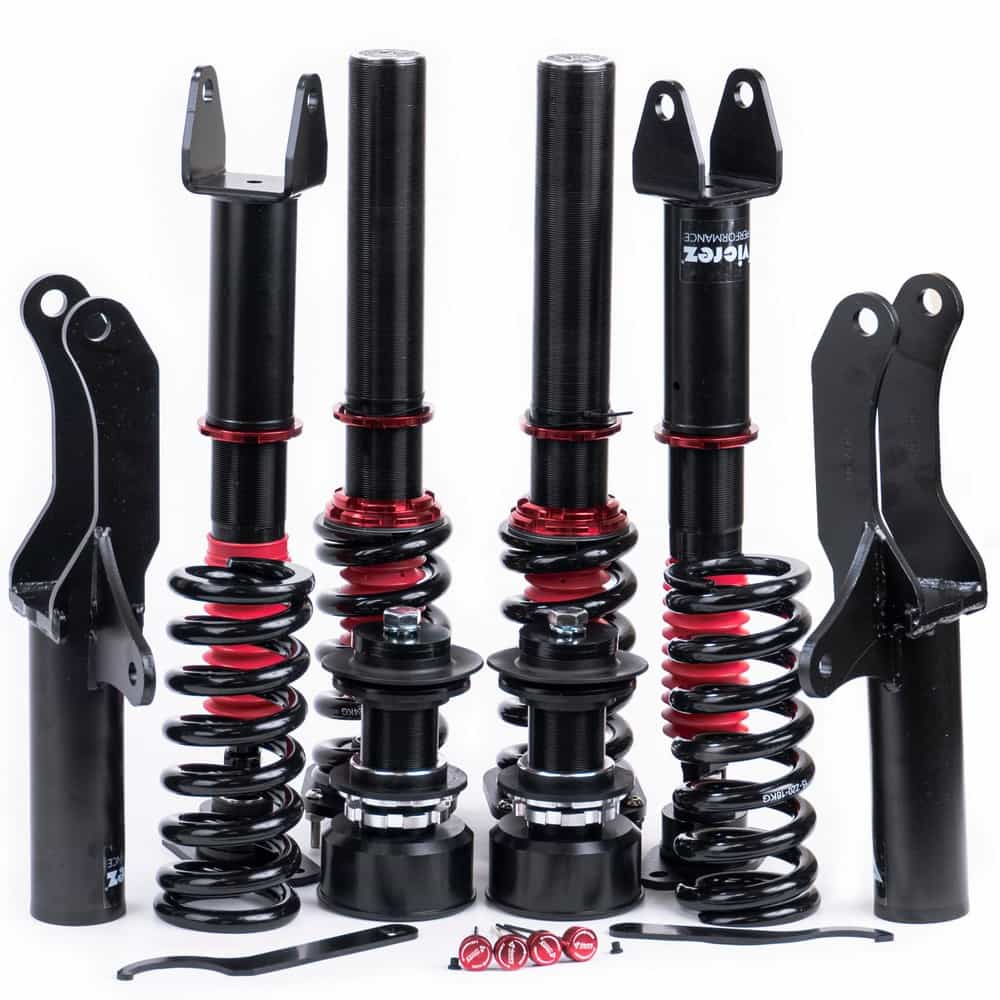
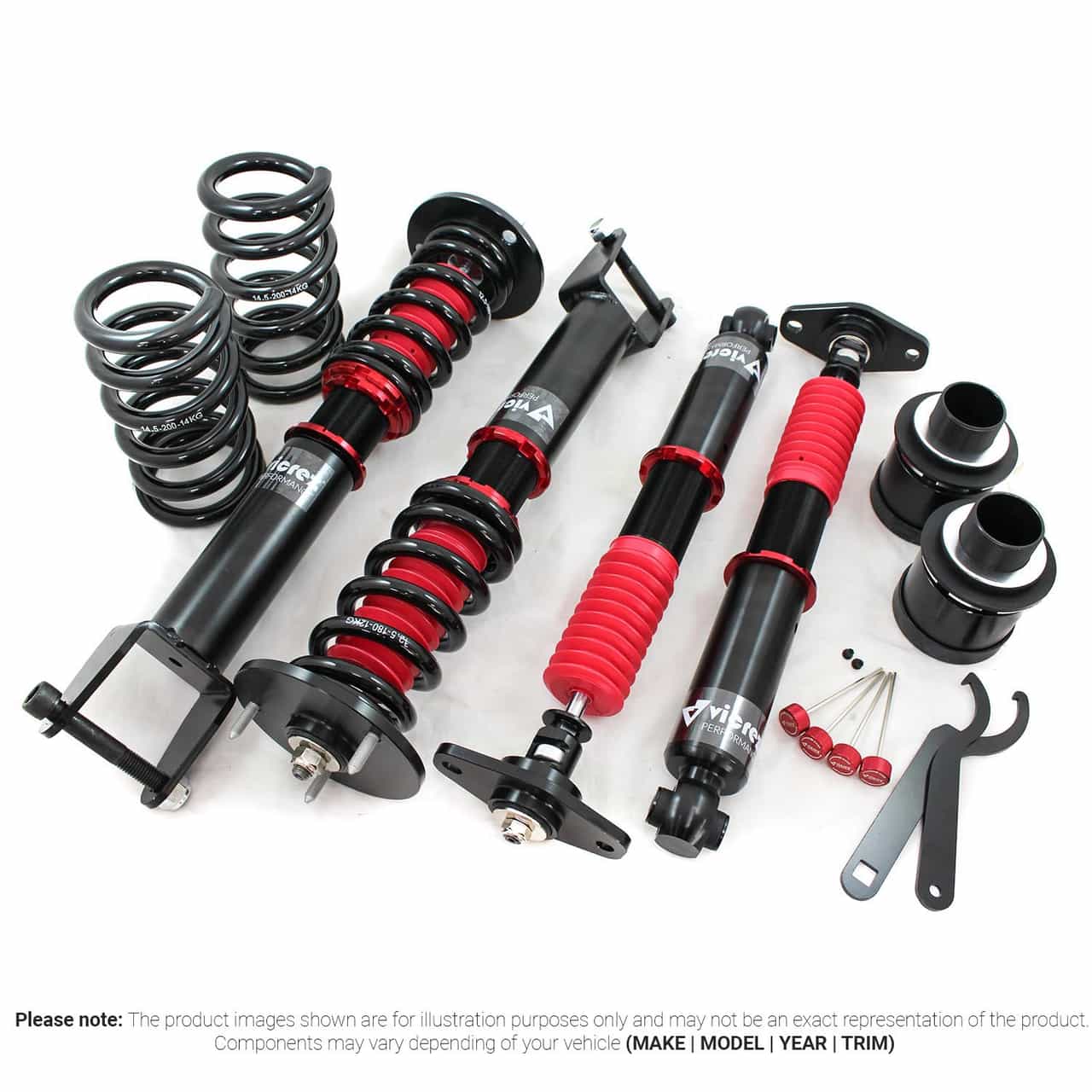
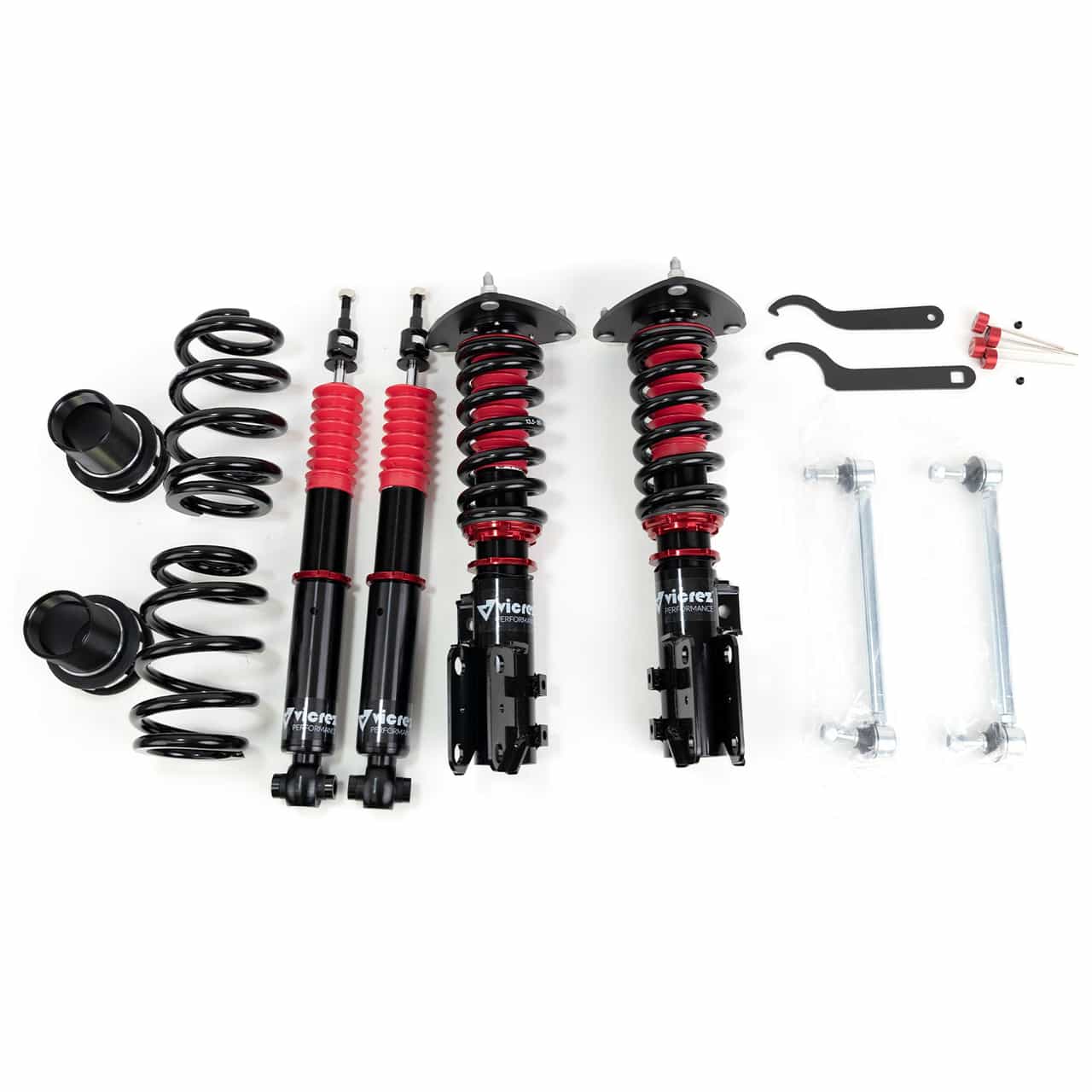
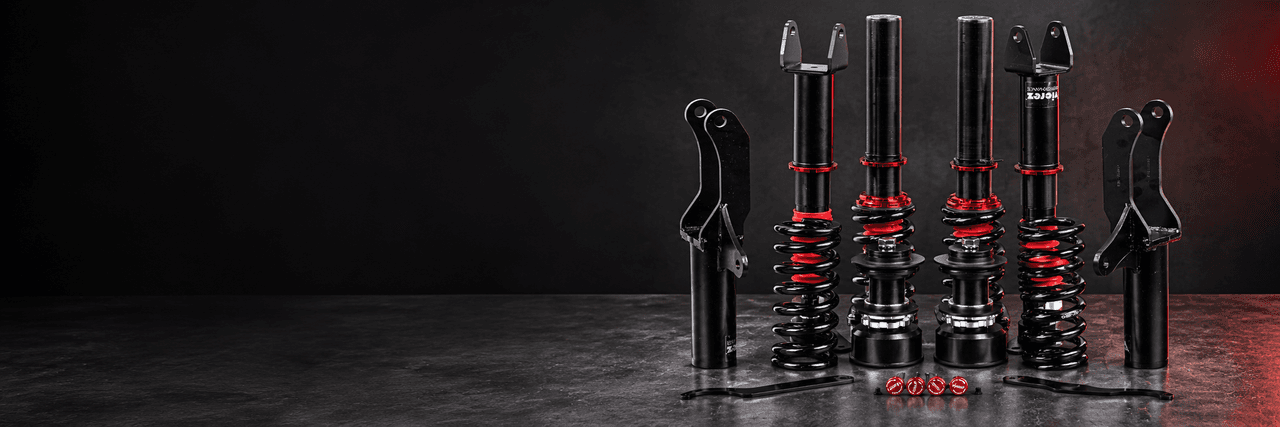
Product configuration shown for reference. Kit contents vary by vehicle.
Choose year, make and model. Check the exact chassis, drivetrain and factory suspension equipment before ordering.
Loading vehicle options…
Vehicle selection narrows the catalog. Confirm the selected SKU’s detailed application and any existing modifications.
Match year, chassis, AWD or RWD and factory suspension options. Share wheel, tire and suspension changes with your installer.
Check mounts, springs, dampers, adjustment tools and supplied hardware. Identify any components that must be reused or ordered separately.
Confirm labor, supporting parts, clearance checks and any required alignment or setup work before comparing your total budget.
Compare the exact application, front and rear specifications, mount design and included parts on each kit.
COMPARE THE COMPLETE SETUP
Check the stated front and rear spring specifications and permitted height range. Confirm whether springs and dampers are combined or separate for your application. Choose around your roads, load and clearance needs.
Read the exact kit’s damping adjustment description and setup instructions. Adjustment counts alone do not tell you the finished ride quality or how the spring and damper work together.
Mount design varies by application. Check front and rear top mounts, any stated camber adjustment and required factory parts. Confirm included hardware and tools from the selected SKU’s package list.
Ask for the spring specification and the kit’s documented setup limits separately. A photograph of threaded collars does not establish the permitted adjustment method, ride height or preload for your vehicle.
Understand preload and spring rate →PLAN THE FINISHED INSTALLATION
Tell your installer about everyday roads, passengers, driveway clearance and the ride you prefer. Identify what you want to change before choosing a kit or height.
Have the shop assess related components and confirm wheel and tire clearance. Ask which hardware, mounts or other parts are needed for your vehicle and the selected kit.
Budget for required alignment and vehicle-system checks. Keep the kit instructions, installation invoice and final setup records, and follow the product’s inspection and maintenance guidance.
Get an itemized quote for the complete job. The product price alone does not include every part or service your installation may require.
FROM VICREZDRIVER
Learn why initial spring compression and linear spring rate are different, and which setup details to request.
Read the spring guide →Understand the different services and the records to request when planning work on your suspension, wheels and tires.
Read the alignment guide →QUESTIONS BEFORE CHECKOUT
Select your year, make and model, then check the exact SKU’s chassis, trim, drivetrain and factory suspension notes. Record any existing modifications. A model match alone does not establish every detail of compatibility. Ask the team to resolve any difference between a product title and its detailed application list before ordering.
Do not assume they are. This catalog includes separate AWD and RWD applications for some vehicles. Match the drivetrain, chassis and model year in the selected product’s documentation, along with any factory electronic or self-leveling suspension equipment.
The available range depends on the exact kit and application. Check front and rear specifications and the permitted operating range in the product instructions. Have your installer assess wheel, tire, body and underbody clearance through suspension travel. An advertised adjustment range is not a recommended driving height for every vehicle.
Spring rate describes the spring’s force change for a given compression. Preload concerns initial spring compression, while damping controls suspension motion. For an ideal linear spring, adding preload does not change its spring rate. Actual height, preload and damping adjustments depend on the kit design; use the exact product’s setup instructions.
Compare the complete kit against your road conditions, passengers, clearance needs and ride preferences. Spring specification, dampers, mounts, tires and the installed setup all matter. More adjustment positions or a lower stance alone does not guarantee a more comfortable ride. Discuss your intended use with the supplier and installer before choosing.
Read the selected SKU’s package list and front and rear component details. Applications can use different mount designs and separate rear springs and dampers. Confirm which mounts, adjustment tools, knobs, hardware and instructions are supplied, and identify anything that must be reused or purchased separately. Category photography is a reference, not a contents list for every kit.
Include qualified installation and any required alignment or vehicle-system checks in the quote. Ask the installer to inspect related components, confirm clearances and follow the kit’s setup instructions. Retain the final setup and alignment records. Labor, supporting parts and alignment should be confirmed separately from the kit price.
Verify the exact SKU and vehicle application, supplied components, current availability, delivery details and return terms. Share factory suspension equipment and existing modifications with the team if compatibility is unclear. Inspect the shipment and resolve questions before installation or modification.
Share your year, model, chassis, drivetrain, factory suspension equipment and the SKU you are considering. Include your existing modifications and intended use.